November is when Iowa's birding shifts from songbirds to big birds. The leaves are down, the crowds are gone, and the state's river valleys fill with ducks, geese, swans and the first wave of wintering bald eagles. Iowa sits between two of North America's major bird highways: the Mississippi Flyway along the eastern border and the Missouri River corridor along the west. Between them, reservoirs, restored wetlands and remnant prairie give migrants places to rest and refuel before winter locks up the lakes.
Bald Eagles in Iowa
November is when the eagles start showing up in numbers. As lakes and rivers to the north freeze, bald eagles move south to the open water below the Mississippi's locks and dams, where turbulence keeps the river ice-free and stuns fish near the surface. Numbers build through late fall and typically peak from December through February, so a November trip is a chance to see the season's first arrivals without the midwinter cold.
Look for eagles perched in tall cottonwoods along the shoreline, circling over the tailwaters below the dams, or roosting on wooded bluffs at dusk. Their white heads stand out from a long way off, but binoculars or a spotting scope make the trip.
- Effigy Mounds National Monument, near Marquette. The 2-mile round trip from the visitor center to Fire Point and Eagle Rock climbs a bluff to sweeping views of the river. Eagle Rock lives up to its name from November through March; eagles winter along this stretch, and admission is free.
- Pikes Peak State Park, McGregor. The overlook here sits about [HEIGHT] feet above the confluence of the Mississippi and Wisconsin rivers, and eagles are seen here in every month of the year.
- Dubuque, Lock and Dam 11. One of the state's most reliable winter eagle concentrations. Watch from the riverfront near the lock, or from the bluffs at Eagle Point Park on the city's north side.
- Clinton, Lock and Dam 13. Clinton's own Eagle Point Park looks out over a wide stretch of river near the lock, part of the Upper Mississippi River National Wildlife and Fish Refuge.
- Quad Cities, Lock and Dams 14 and 15. Try the Lock and Dam 14 viewing area at Pleasant Valley, the Davenport riverfront below Lock and Dam 15, and Credit Island Park.
- Muscatine and Keokuk. Downtown riverfront parking in Muscatine overlooks open water, and the Lock and Dam 19 area at Keokuk anchors one of the state's longest-running eagle appreciation events.
Who Else Is Passing Through
Eagles get the headlines, but November is really waterfowl month in Iowa. Duck diversity holds at its peak until the lakes freeze, usually in mid-to-late December, and the birds that follow them — eagles, gulls, hawks — come along for the ride. Migration is weather-driven: a strong cold front from the north can push tens of thousands of birds into the state overnight.
Trails to Hike and Find Birds
Every corner of Iowa has a November birding walk worth taking. These picks favor trails and viewing areas that stay open late in the season, with notes on accessibility where it matters.
Northeast Iowa: Driftless bluffs and marshes
- Fire Point Trail, Effigy Mounds National Monument (Harpers Ferry/Marquette). A 2-mile round trip with a steady climb to two Mississippi River overlooks, passing ancient effigy mounds along the way.
- Cardinal Marsh Wildlife Area, near Cresco. Winneshiek County's premier birding destination covers 1,165 acres of marsh, woodland and restored prairie. Fall brings mixed flocks of sparrows and juncos; by late November, watch for rough-legged hawks and northern shrikes arriving for winter.
- Decorah Fish Hatchery. Home of the famous eagle webcam, the hatchery is still a good place to look for eagles and other birds — and an easy add-on to a Decorah weekend.
Western Iowa: Loess Hills and the Missouri River
- DeSoto National Wildlife Refuge, Missouri Valley. The refuge's peak fall migration typically runs late October through early December. Watch thousands of ducks and geese from the visitor center's viewing windows, then drive the auto tour route to the Bob Starr Wildlife Overlook blind.
- Broken Kettle Grasslands, north of Sioux City. Iowa's largest remnant prairie, with a resident bison herd. Afternoons are best for raptors in the colder months: look for eagles, hawks and other raptors.
- Bacon Creek Park, Sioux City. A 3-mile paved loop around the lake is accessible year-round and good for lingering waterfowl in fall.
Central Iowa: Des Moines River valley
- Saylorville Lake, north of Des Moines. This 17-mile reservoir has a bird list of more than 300 species. In November, scope for loons, grebes and rafts of diving ducks from the Lakeview Recreation Area. Eagles gather near the dam as winter sets in.
- High Trestle Trail Bridge and Grant's Woods, Madrid. A gravel path from Grant's Woods passes a viewing blind and climbs to the High Trestle Trail, where the half-mile bridge stands 13 stories above the Des Moines River. Look for red-tailed hawks and bald eagles above and below.
- Swede Point Park, Madrid. Trails drop through wooded ravines to the Des Moines River. Stop at the wildlife viewing station just off the trailhead and look for red-headed, pileated and other woodpeckers.
Southern, Southeastern Iowa and beyond
- Lacey-Keosauqua State Park, Keosauqua. One of Iowa's largest and oldest state parks, with 13 miles of trails through oak-hickory bluffs above the river. A 3-mile segment follows the bluff past Civilian Conservation Corps stonework and a group of ancient burial mounds
- Honey Creek Resort State Park, near Moravia. Wooded trails along the north shore offer lake views and birds.
- Lily Lake, Amana Colonies. A reliable spot for trumpeter and tundra swans, and an easy pairing with lunch in the Amanas.
Plan Your November Birding Trip
- Time it right. Mornings are best for most birds; late afternoons are better for raptors and evening roosts. Water birds stay until the lakes freeze, usually mid-to-late December.
- Watch the weather. A strong cold front out of the north often brings the biggest movements of geese, ducks and swans.
- Dress for wind. River bluffs and open reservoirs run colder than the forecast. Layers, a hat and gloves make a long scan comfortable.
- Bring optics. Binoculars cover most sightings; a spotting scope helps on big lakes and wide stretches of river. Some sites, including the High Trestle Trail bridge and DeSoto's visitor center, offer viewing scopes or loaner binoculars.
- Know the season. November overlaps with hunting seasons on many wildlife areas. Wear blaze orange on public hunting land, and respect signed waterfowl refuge closures.
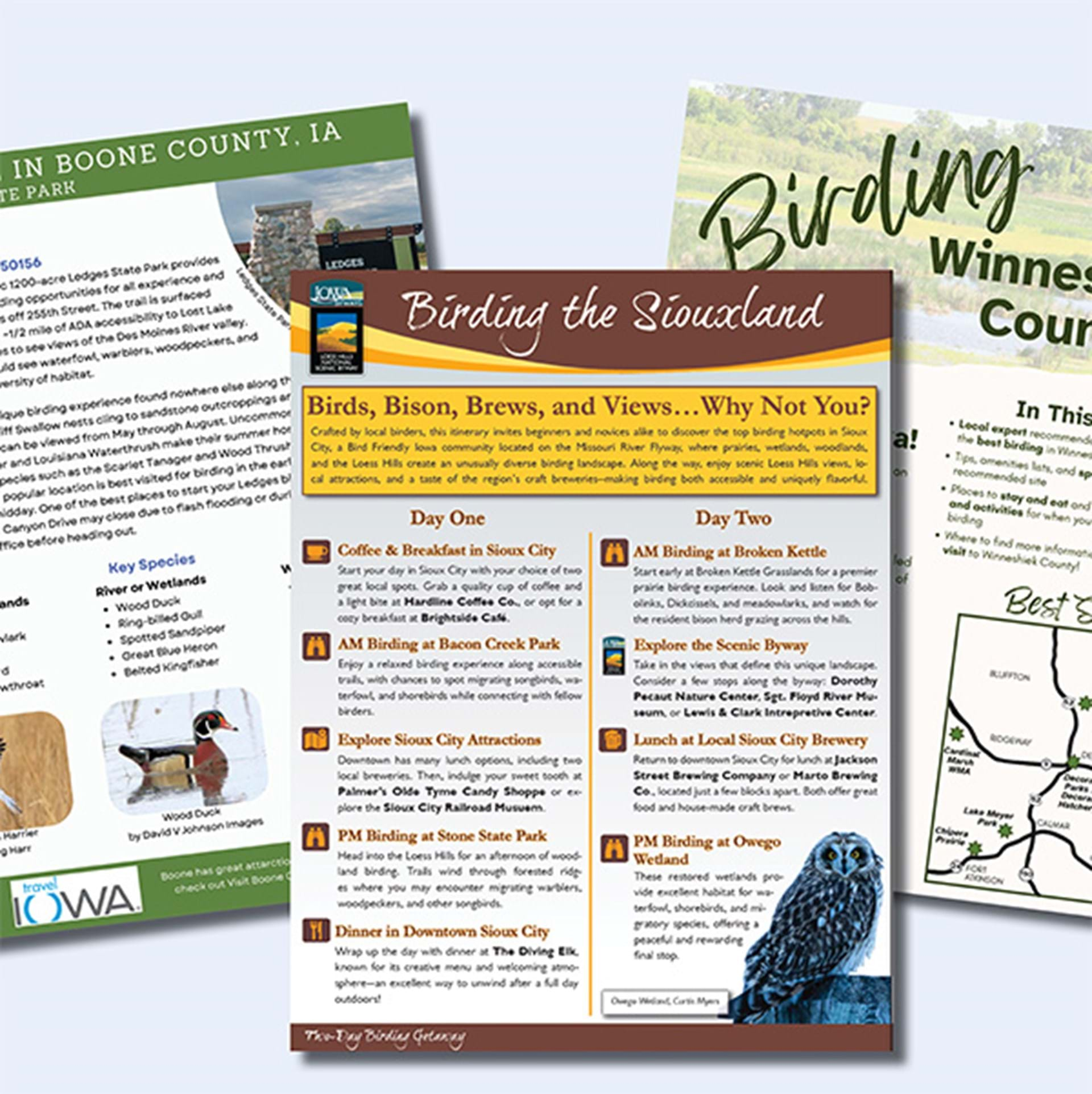
- Go deeper. Iowa's birding trails — the Great River Birding Trail along the Mississippi, the Siouxland Trail in the Loess Hills and the Makoke Trail in central Iowa — map out more stops. Bird Friendly Iowa communities such as Sioux City and Winneshiek County publish their own birding itineraries.